Logistics
Marketplace
Making Scrap selling faster, simpler and more reliabe
Trashandler is a scrap collection platform that connects scrap sellers with verified scrap buyers and streamlines the entire pickup workflow - from request to payment

My Role
Product Designer
Research, Product Strategy, UX, UI, Design system
Scope
End-to-end Design
From scrap pickup request to scrap collection and payment
Users
B2c - Scrap seller
B2b - Scrap buyer
Outcome
Seller finds scrap buyer under 30secs
Scroll down to view case study
Problem Statement
How might we make selling and buying scrap quick and effortless for our users while ensuring sellers receive fair prices and buyers get reliable pickup opportunities, helping recyclable waste stay out of landfills and enter the recycling ecosystem? This became the core problem we set out to solve.
Context
Dump yards are expanding, polluting our cities. Ahmedabad like many cities across India, faces this critical issue.
Root causes of problem

The lack of a structured system for collecting and managing scrap leads to improper disposal and environmental damage.
Key challenges behind the root causes
Time-Consuming Process
Selling scrap is time-consuming and inconvenient, often discouraging people from recycling.
Labor-Intensive
The current process requires significant effort and can be physically demanding.
Our solution

Made Selling scrap

Quick as getting potato chips on Blinkit in 10mins

Effortless as selling your furniture on Olx
Made impact on dumpyards

We prevented 10k+ Users dumping their scrap to dumpyards in 1 year just after launch

We provided access to 100+ B2b Users structured scrap collection system in 1 year just after launch
Backend Developers

Product Design
Frontend Developers
Marketing

Hey,
I’m here
My role
In designing and building solution
Drive the scrap collection app UX UI Design which streamlines scrap selling and buying from concept to launch
Key Responsibilities
•
Developing & executing design strategies to guide product development.
•
Conducting user and competitors research.
•
Collaborating with teams to address user needs and Business goal.
•
Creating wireframes and prototypes for quick validation, ensuring a user-friendly experience
•
Creating wireframes and prototypes for quick validation, ensuring a user-friendly experience
•
Testing Designs, Implementing changes, Handing off the Final Designs to Developers,
The Team
I collaborated with to design and build solution
Backend Developers
Frontend Developers
Marketer
Design Process

Solution space
Developing unique value proposition
Features prioritization
Define Goals
IA & User Journey and Flows
Design phase
ReBranding
Paper wireframing
Design system
Hi fi wireframing
Prototyping & Testing
Feedback Implementation
Execution Phase
Develop functionality
Integration (API’s)
System testing
Problem Space
Stakeholder interview
Market research
User Research
Competitors research
In Problem phase
I dove headfirst into the problem.
I spent days on Google Meet with the founders asking gazillion questions to better understand their vision and decode the root of the problem
I talked to users, digging into their stories to spot the friction points others miss.
I researched existing solutions, analyzed gaps, and hunted for patterns.
Market Research Insights
Target users
Household
Primary
Restaurants
Secondary
Office
Tertiary
Key trends:
In market from competitors
Size based scrap weight entering option
Pickup tracking system
User Research Insights
60%
Don’t sell scrap
Painpoints
•
Labor-intensive processes are overwhelming.
•
Unfamiliarity with online selling platforms creates barriers.
•
Lack of connections of buyers prevents from selling scrap
•
Difficulty in locating buyers prevents from selling scrap
•
Challenges in finding buyers quickly add to stress
40%
Sell scrap
Painpoints
20%
Sell to old buyer
10%
Sell to regular buyer
10%
Sell to near by buyer found on google near by
•
Time-consuming tasks lead to frustration.
•
Unfamiliarity with online selling platforms creates barriers.
•
Desire for the convenience of selling scrap anytime.
•
Seeking guidance on how to classify items as scrap.
•
Need for a quick and easy way to upload scrap details.
•
Time-consuming tasks lead to frustration.
•
Unfamiliarity with online selling platforms creates barriers.
•
Challenges in finding fast buyers quickly adds to stress.
•
Seeking guidance on how to classify items as scrap.
•
Expects to getting paid on time and receiving a fair price.
•
Desire for the convenience of selling scrap anytime.
•
Concerns about whether sold scrap will be recycled properly.
•
Labor-intensive processes are overwhelming.
•
Time-consuming tasks lead to frustration.
•
Seeking guidance on how to classify items as scrap.
•
Expects to getting paid on time and receiving a fair price.
•
Need for a quick and easy way to upload scrap details.
•
Concerns about whether sold scrap will be recycled properly.
•
Trouble locating nearby buyers complicates the process.
•
Challenges in finding buyers quickly add to stress
Competitor research Insights
Incompletely met needs
Creating pickup request
Challenges include:
•
A modern and engaging design that feels intuitive
•
Quicker task completion times
•
Options for selling unlisted scrap
•
Essential information about buyers and pickup schedules
•
Convenient access for users to sell scrap at their preferred times.
Pickup tracking
system
Challenge:
•
Easily view buyer locations both at a glance and on a map.
Unmet needs
Managing pickups
Easily view, monitor, and modify your pickups.
Tracking earnings
Gain insights to view, track, and monitor your earnings effectively.
Guide to verify items are scrap
An quick guide for users to effectively categorize their items as scrap.
Prioritization
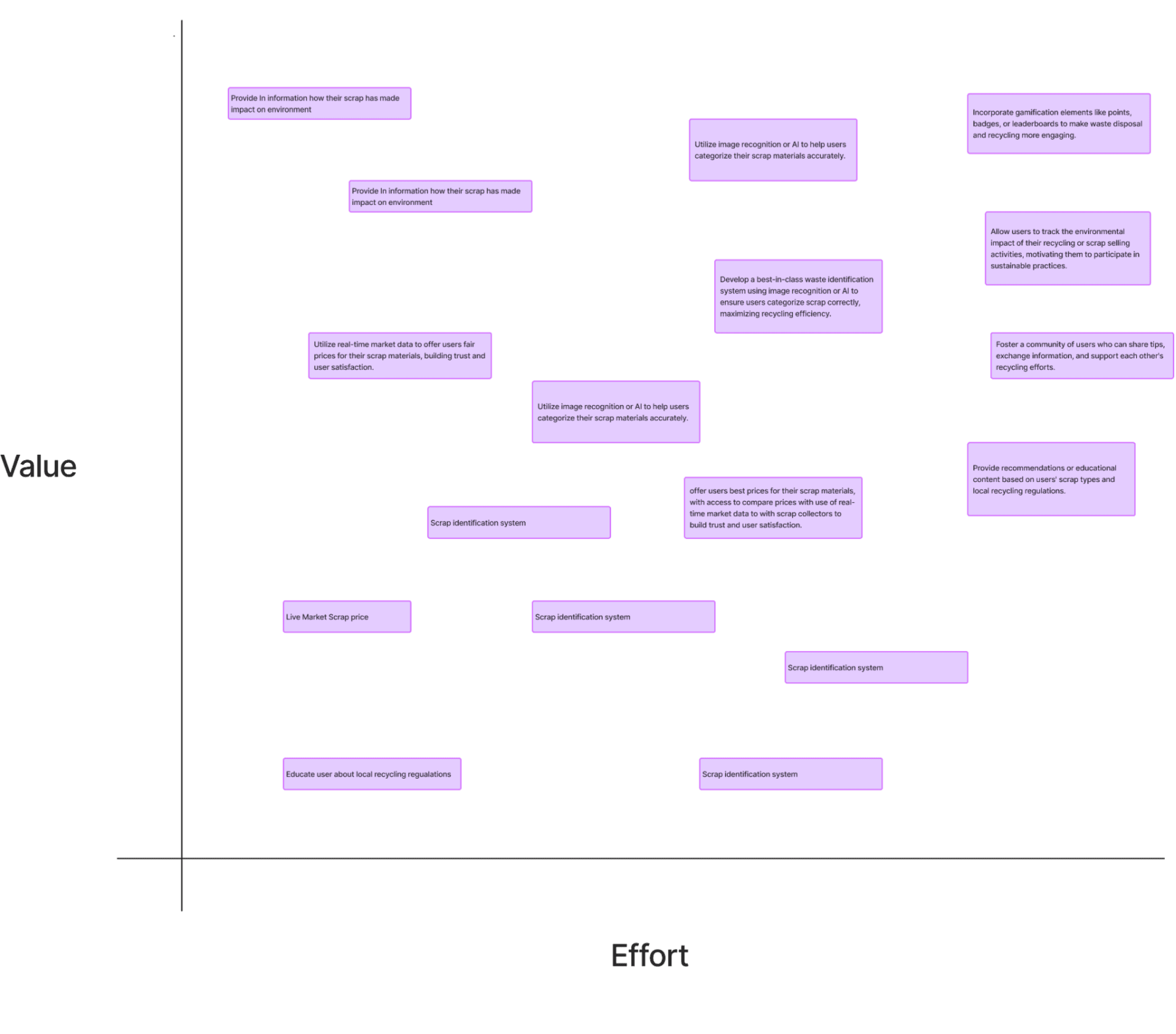
Prioritizing the ideas gathered during team brainstorming sessions.
Value vs Effort
MoSCOW
Must have
Should have
Could have
Won’t have
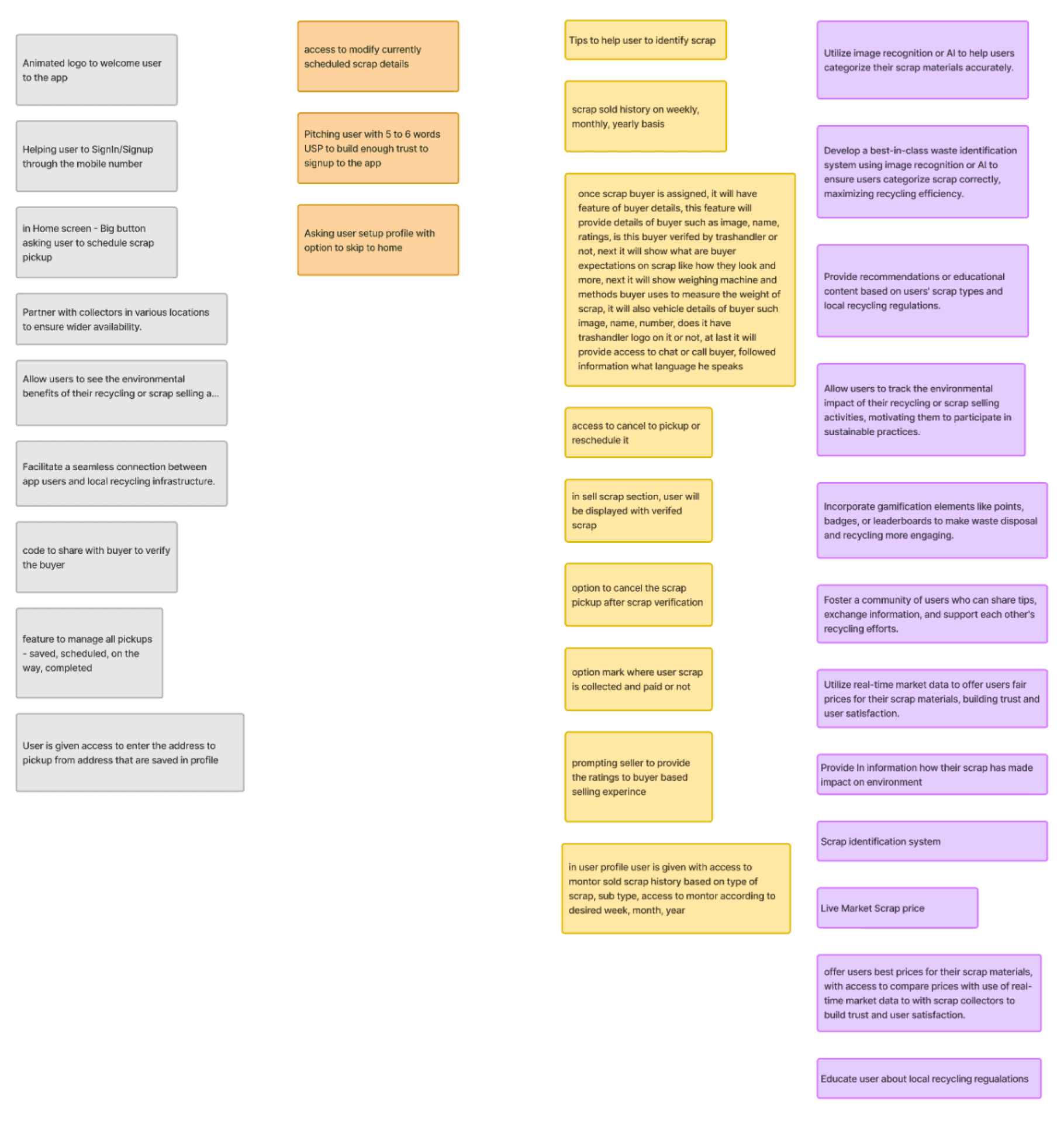
Kano
Must have
Performance attributes
Delighters
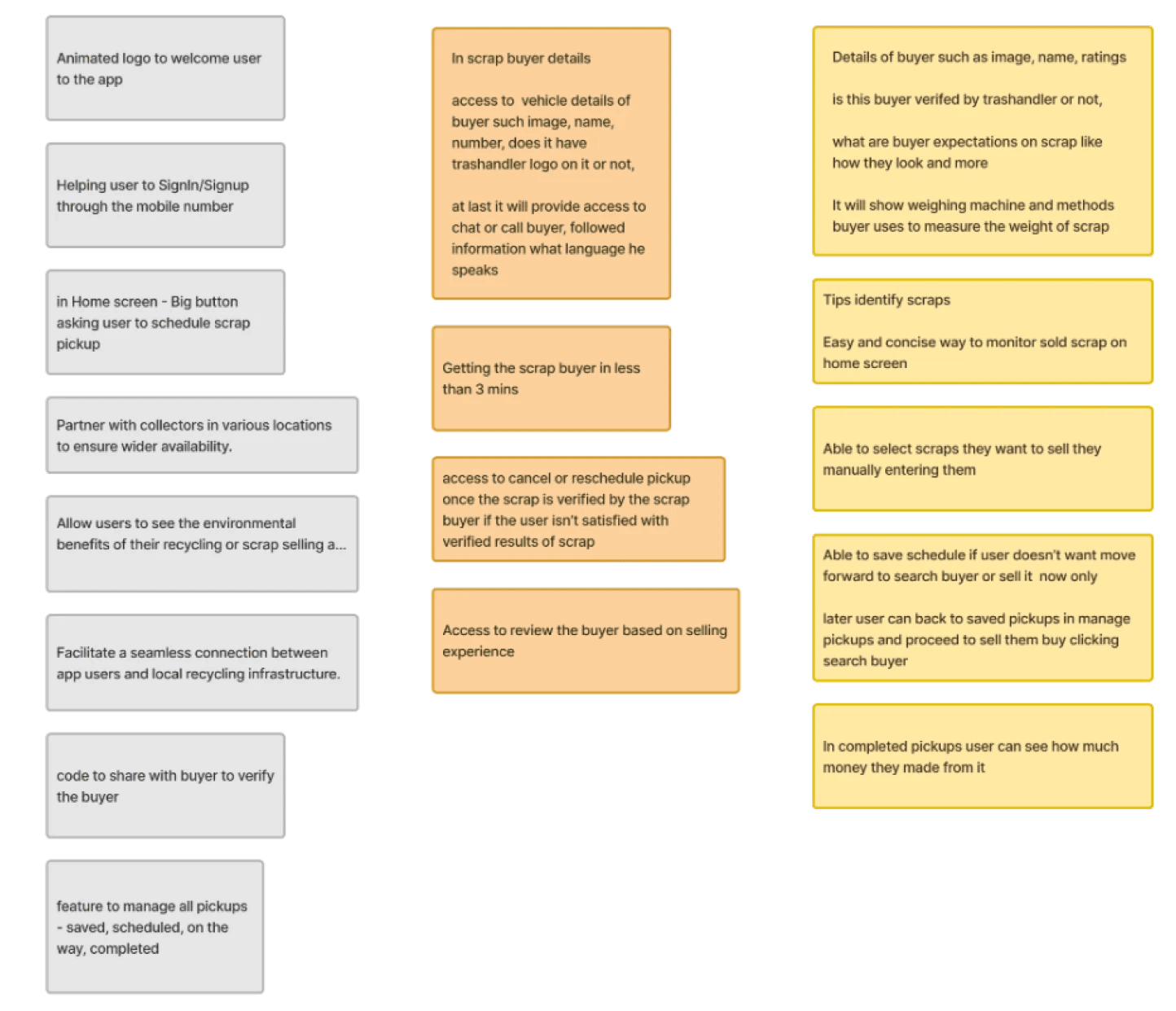
Prioritized Features after prioritization
Book scrap pickup
Easy and quick
Find buyer
Quickly find with a verified buyer
Find a buyer in just 1 to 3 minutes
Get buyer who provide best price
Tracking pickup
Effortlessly track buyer locations in real-time using an interactive map
Tracking earnings
Monitor your earnings weekly and monthly
How we made selling scrap quick and effortless
We made sure seller can
Create scrap pickup request
In 2 steps
Find the buyer
In 30s
Sell scrap
At Door step
At Convenient time
Iterations of User selling scrap flow
What Changed and Why It Mattered
Home
(First Version)
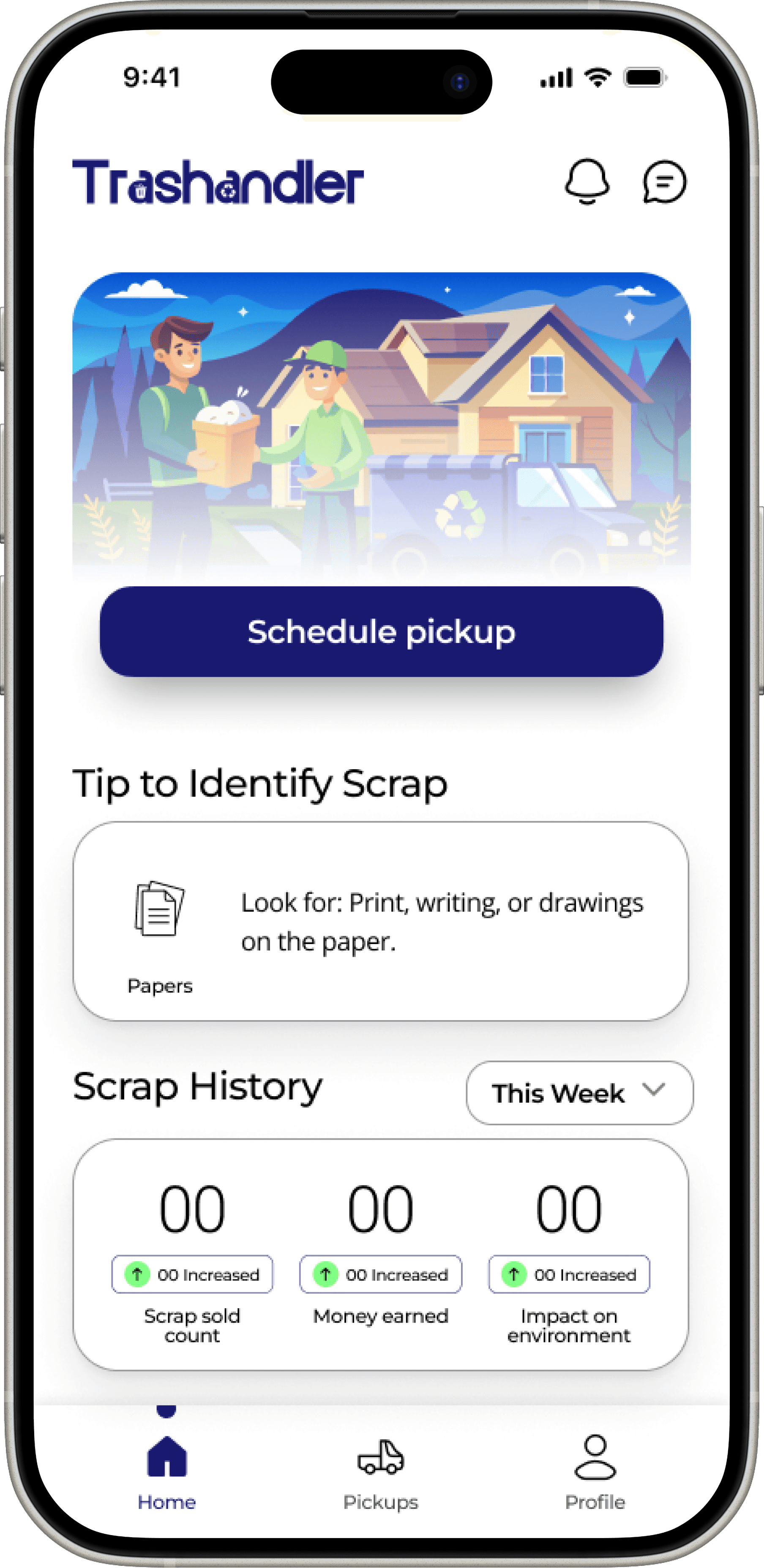
What didn't work
Problem:
1.
❌ Users misunderstood it would open calendar to schedule pickup
❌ Created hesitation, users weren’t sure whether it will take them to create pickup request or am i confirming to schedule pickup
Home
(Final Version)
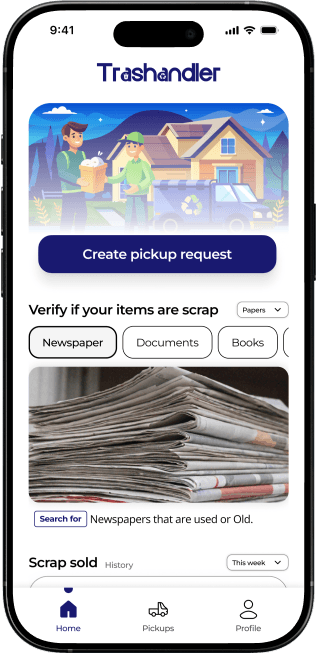
What worked
Solution:
1.
✅ Provided clear action-oriented language aligned with user mental model.
✅ Removed ambiguity, helped users know they were about to start a new pickup request
1
1
Create Request
(First Version)
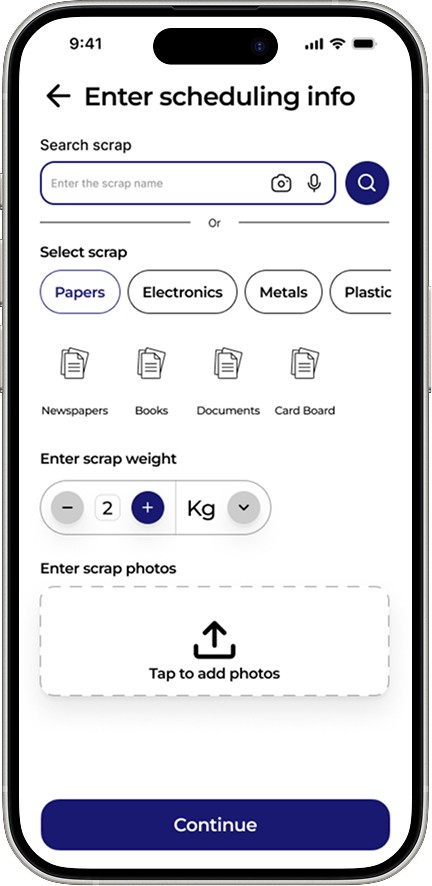
What didn't work
Problem:
1.
❌ Scrap entry offered two options, but the first searching and selecting from search list was high interaction cost and less used.
2.
❌ Users had to enter the exact weight, but most didn’t have weighing tools, leading to inaccurate data and conflicts during selling.
2
1
Create request
(Final Version)

What worked
Solution:
1.
✅ Switched to direct scrap type selection, reducing interaction cost and aligning with 80% user behavior.
2.
✅ Introduced weight ranges, matching how users perceive weight visually or by feel.
1
2
Pickup tracking
(First Version)
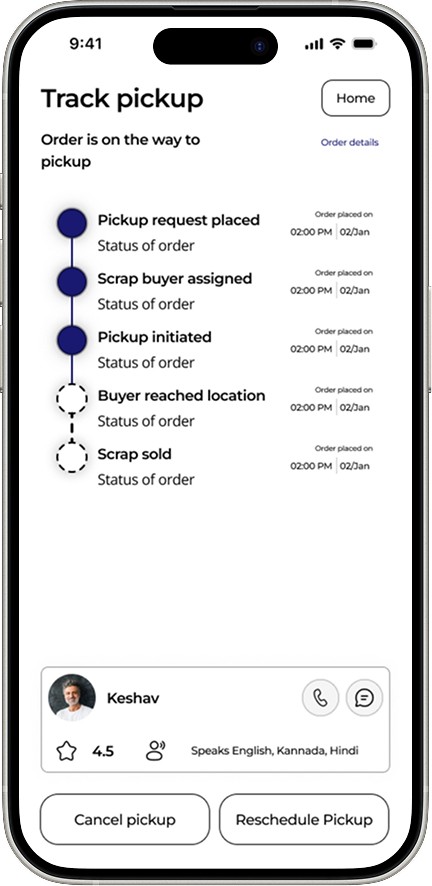
What didn't work
1.
❌ Provided generic status updates (order placed, pickup initiated) that didn’t help users track vendor in real-time.
2.
❌ Missed building trust — no info on vendor credibility, arrival time, or visual tracking like a map.
1
2
Pickup Tracking
(Final Version)

What worked
1.
✅ Introduced live tracking on map + visual glance with timer (e.g., “30 mins away”) to reduce uncertainty and improve readiness.
2.
✅ Added vendor trust signals: verified badge, buyer company, on-time pickup, fair pricing ratings.
1
2
Final High fidelity Seller Userflows

User(Seller) Onboarding
Users are prompted to select their profile type.
If they choose the seller option, they will be taken through an introductory experience.
The experience explains how Trashandler helps users earn money from their scrap.
It emphasizes the ease and speed of the process.
Users are assured that their scrap will be recycled.
User selling scrap
Users can create a pickup request by clicking 'Create Pickup Request'.
They enter details about the scrap, including time, date, and location.
After submission, users get a booking confirmation and buyer details within a minute.
Sellers can view the buyer's profile and track their arrival on a map.
The buyer inspects the scrap upon arrival, and the user receives a verification report.If both agree, the seller finalizes the sale by clicking 'Sell Scrap.'
Booking is completed after payment and collection is confirmed by seller on Trashandler app

User managing pickups
Users can manage pickups through the bottom navigation bar's pickups section.
This section includes three tabs: Saved, Scheduled, and Completed.
In the Saved tab, users can view saved bookings and search for buyers using the 'Search Buyer' button.The Scheduled tab shows if a pickup is on its way, along with the estimated arrival time, and allows users to edit details.
The Completed tab displays all finished bookings, offering options to rebook or adjust details.
This process helps users efficiently manage their pickups with minimal effort.

User exploring profile
Users can track their earnings in the sold scrap section on a weekly or monthly basis.
Analyze income from specific scrap types and monitor growth or decline over time.
View saved addresses and payment methods for booking pickups.
Manage profile settings, including name, profile type, contact information, frequently used addresses and more.Connect with customer support if needed.
Switch between different accounts or log out.
How did it turn out?
Selling scrap became
Quick as getting potato chips on Blinkit in 10mins
Effortless as selling your furniture on Olx
Through quick and Effortless scrap selling
Trashandler prevented 10k+ B2c Users dumping their scrap to dumpyards in 1 year just after launch
Trashandler provided access to 100+ B2b Users structured scrap collection system in 1 year just after launch
OPEN TO PRODUCT DESIGN OPPORTUNITIES
Looking for a product designer who can simplify complexity and ship products people adopt?
I’m excited to work with teams building AI, SaaS, marketplace, and workflow products where product thinking, systems thinking, and close collaboration drive better outcomes.
View other Case studies
Products I’ve Helped Build
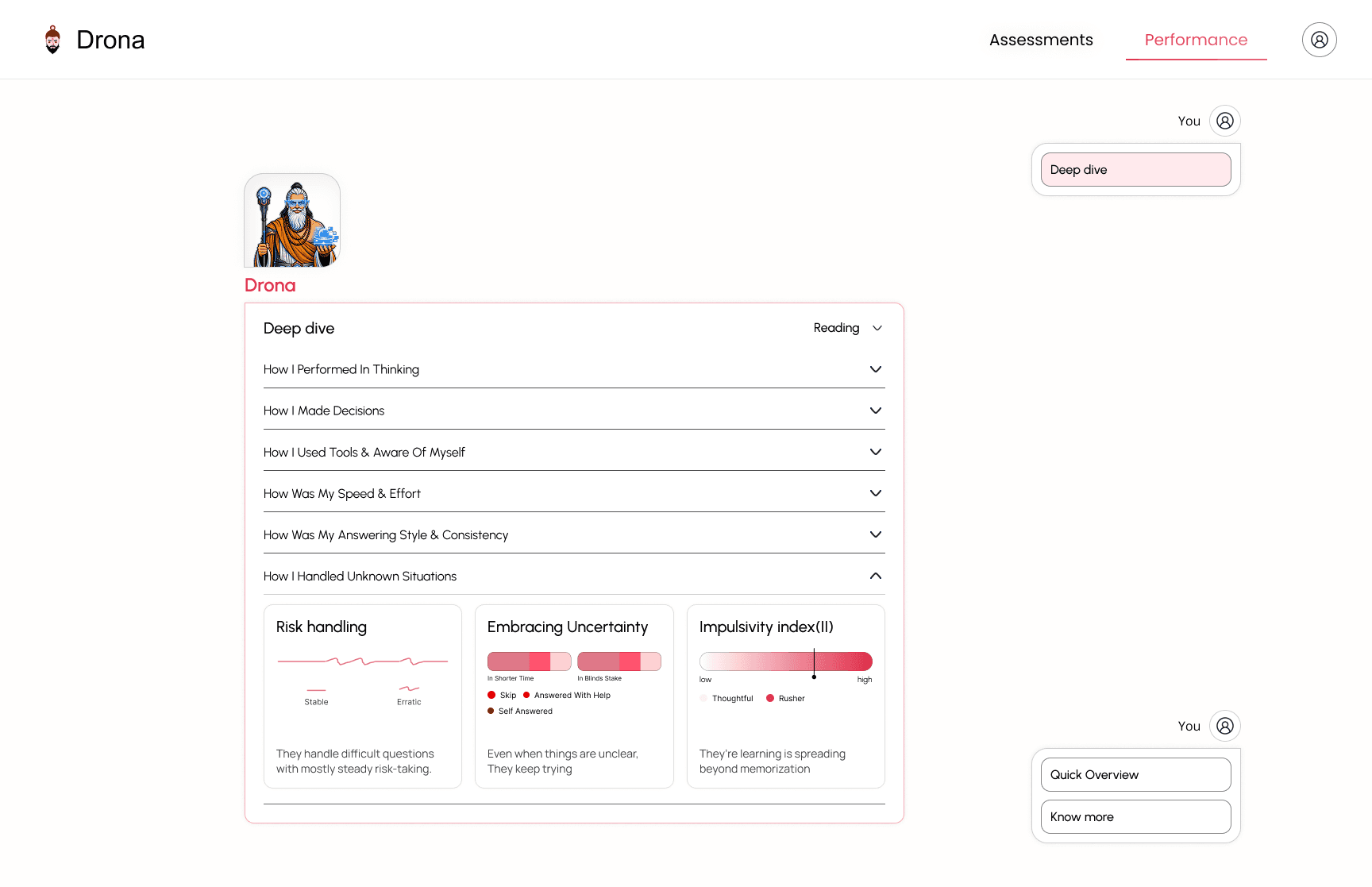
Altumind
Helping teachers measure critical thinking instead of memorization.
Multi-role workflow · AI Chat Experience · Analytics Dashboard
Edtech
0→1 Product
Used by 10+ Institutions
View case study

Arteco
Fixing broken architecture academic material supply system
Multi-role Marketplace · Ecom Experience · Logistics Workflow
Logistics, Marketplace
0→1 Product
B2b 10+ institutions
View case study