User(Student) buying Architectural material

Context
Enabling architecture students to purchase architectural materials instantly from an on-campus vending machine during class/college time, without planning, travel, or friction.
The Design Problem (Flow-Specific)
Architecture students frequently realize they need materials at the moment of work inside studios, classrooms or before the class. Traditional options (shops, borrowing, advance buying) introduce delay, stress, and wrong purchases under pressure.
The challenge was to design a system that lets students identify, buy, and receive the correct material immediately - without learning, browsing, or hesitation.
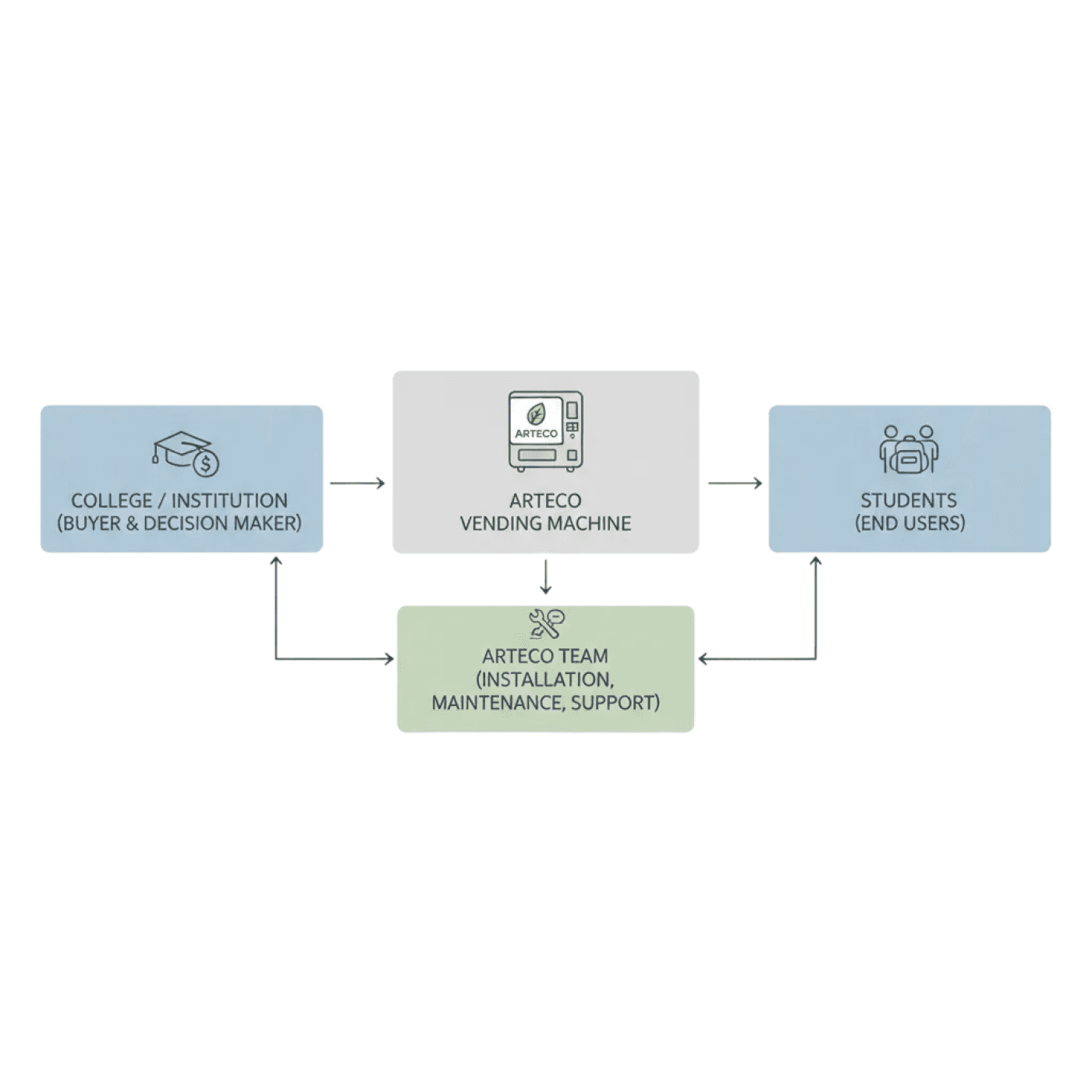

The entire experience was designed around one principle:
Buying from the vending machine must be as easy as an offline stationery shop or easier.
If the flow introduces more effort than asking a shopkeeper and paying, it fails.
No exploration.
No learning.
No discovery.
Only execution.
Users & Real-World Constraints
Primary users are first- and second-year architecture students who are:
New to the city
From non-tech-heavy backgrounds
Often using parent-provided money
Interacting with a vending machine for the first time
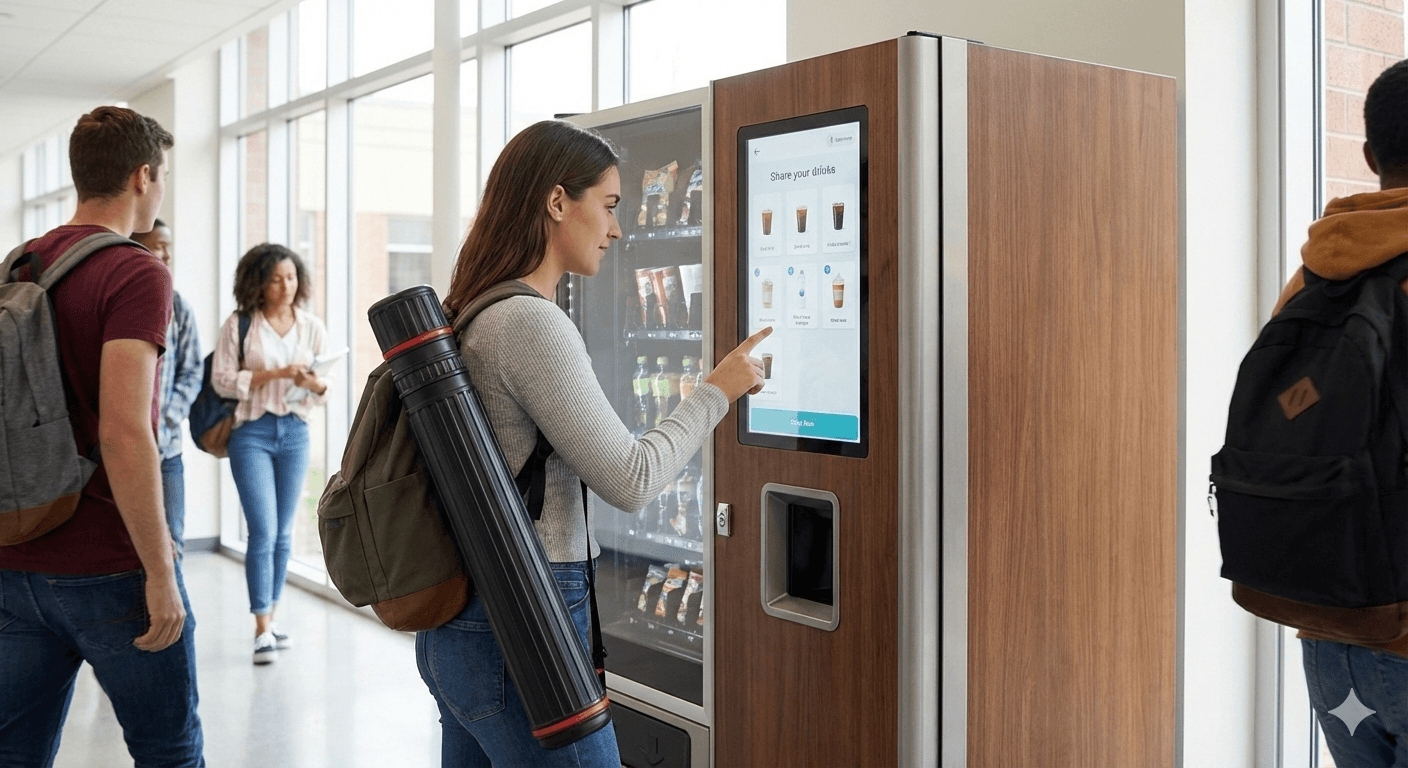
This is a public, physical interface, not a personal device. Design had to account for:
Standing posture and reach
Public usage anxiety
Fear of irreversible actions
Mixed lighting and campus placement
Familiar mobile-like interaction patterns
The interface needed to feel safe, obvious, and non-threatening on first touch.
Risks I Designed Against
Key risks that could break trust instantly:
Buying the wrong material or size
Losing money due to confusion
Feeling embarrassed in a public space
Hesitating to use the machine again
For many students, this may be their first interaction with a system involving money outside their own phone. Any uncertainty here leads to abandonment.
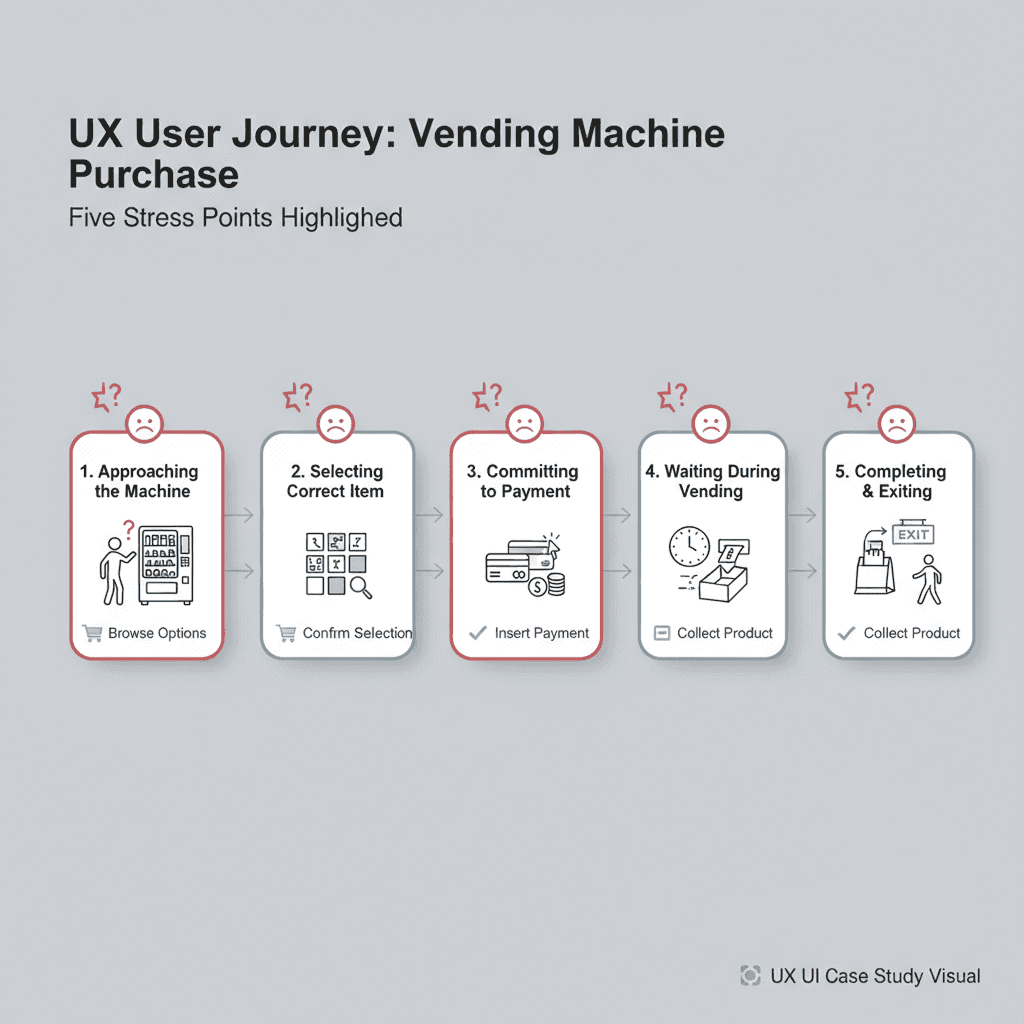
Moments of Maximum Stress
Stress spikes at specific moments:
Approaching the machine for the first time
Selecting the correct material and size
Committing to payment
Waiting during vending
Completing and exiting the session
Each screen was designed to reduce uncertainty exactly at these points, never adding friction elsewhere.
Decisions I Intentionally Removed
To protect clarity and speed, I intentionally removed:
Login and accounts
Search
Price comparisons
Wishlists
Personalization
Cross-device syncing
This is not a browsing experience.
It is a high-urgency, physical execution flow.
Every removed decision reduced cognitive load and first-use anxiety.
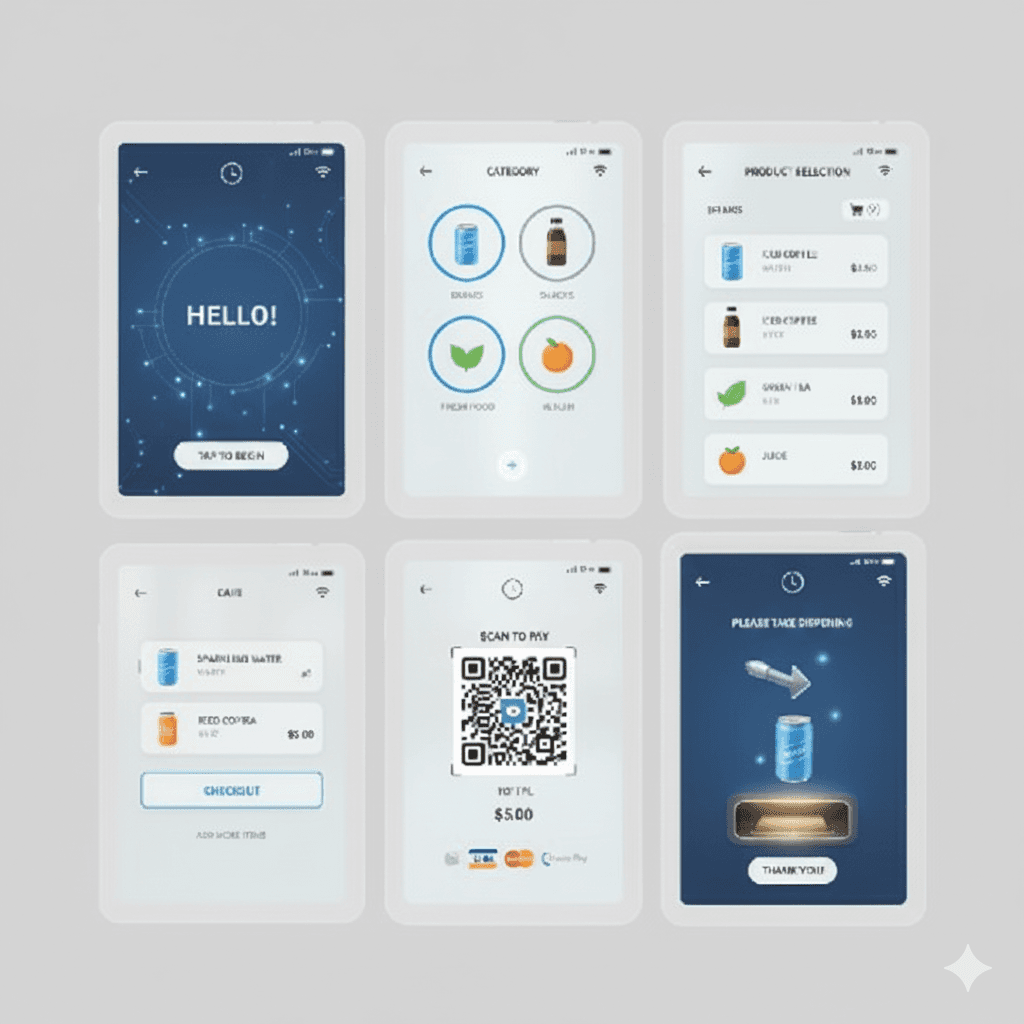
Flow Structure
The flow mirrors an offline shop interaction:
Start
Select category
Choose material and size
Review cart
Pay
Receive item
Nothing is hidden.
Nothing is irreversible until payment.
Error Prevention & Trust Building
Instead of handling errors after they occur, the system prevents them.
Key safeguards:
Clear material details at every step
Persistent back navigation
Explicit ‘Proceed to Buy’ commitment
Payment handled on the student’s own phone
Clear payment confirmation before vending
At no point is the student unsure about:
What they are buying
Whether money is deducted
What happens next
Success Signals (Behavioral)
Success is measured through behavior, not feedback.
Healthy signals:
One-pass completion without loops
Minimal backtracking
Confident QR scan
Immediate vending
Failure signals:
Repeated navigation loops
Drop-off at payment
QR screen viewed but not scanned
These signals directly inform iteration.
How This Scales
When product scales, I would:
Add faster and more convenient payment methods
Introduce a conversational based material buying experience (guided input / AI)
The long-term goal is not more features, but less effort per purchase - making the system feel increasingly human.
View other Case studies
Products I’ve Helped Build
Altumind
Helping teachers measure critical thinking instead of memorization.
Multi-role workflow · AI Chat Experience · Analytics Dashboard
Edtech
0→1 Product
Used by 10+ Institutions
View case study
Trashandler
Digitizing India's informal scrap marketplace.
Multi-role Marketplace · Pickup Scheduling · Logistics Workflow
Logistics, Marketplace
0→1
B2b 100+ Vendors & B2c 10K+ Users
View case study